How Empathy Can Save Us

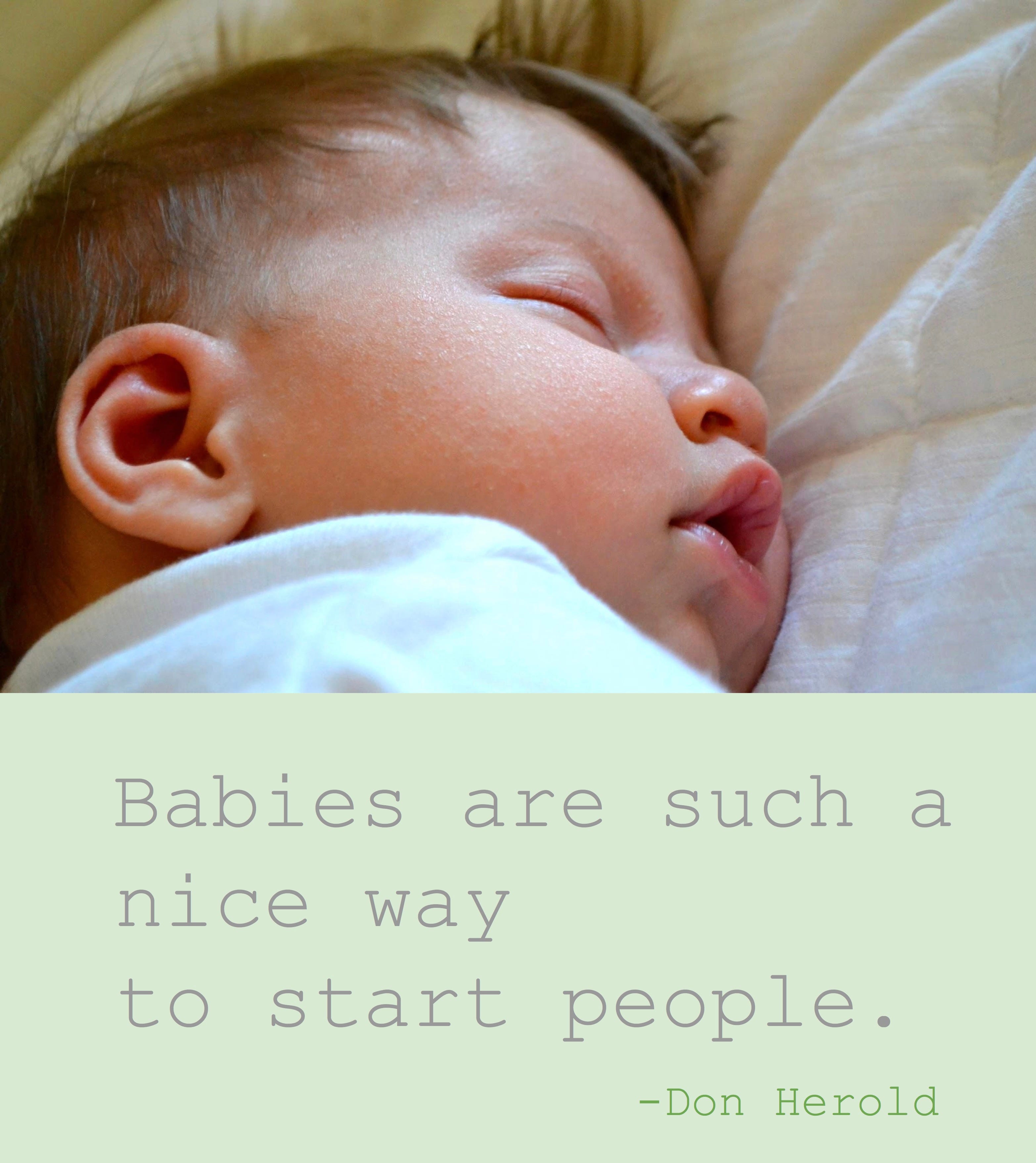
A few weekends ago, I held an exquisite sleeping 5-month-old baby in my arms, the god-daughter of a friend of mine. I have rocked and cradled babies for more than 21 years, but it never ever gets old. When she woke up, her bright eyes stared into mine for a few moments, and everything else around me vanished from my awareness. There is nothing quite like the piercing gaze of a tiny infant. She started cooing a few minutes later, and my whole body reacted with chills and delight. Babies are magic.
When my fifth baby, Hope, was born, it had been nearly five years since a baby had graced our household. The ways she transformed our family were remarkable. Tenderness and affection took over our home. My almost-7-year-old son kissed his baby sister’s hands and cheeks multiple times every day. So often, I would hear his voice exclaiming, “Hope is just so cute!” I remember wondering at the time… How much of the violence in today’s world could be remedied if every 7-year-old boy had a baby sister?
About a decade ago, I learned about a group called Roots of Empathy. Their organization’s aim is to increase empathy within our societies by bringing babies into classrooms:
Roots is built on a simple notion: When babies such as June bring their huge eyes, irrepressible smiles and sometimes unappeasable tears into the classroom, students can’t help but feel for them. The idea is that recognizing and caring about a baby’s emotions can open a gateway for children to learn bigger lessons about taking care of one another, considering others’ feelings, having patience (Source).
Classrooms that have been part of the Roots of Empathy program have seen significant reductions in bullying. One study showed 88 percent of Roots participants “decreased in what’s known as ‘proactive aggression’ — the coldhearted use of aggression to get what you want” (Source). Babies can bring out the purest, most beautiful inclinations in the people around them. That has certainly been the case with my little (big) family. I wish every school could benefit from empathy-building programs like Roots.
When I was a first-time mom, a friend of mine invited me to attend an event for moms and kids. I don’t remember much about it, but one thing that stuck with me (and still does 20 years later) was a presentation about the importance of empathy. The instructor encouraged us to respond to our children’s distress or tantrums first with empathy. She explained that we all have an innate need to feel understood, including and especially children. She encouraged us, when our children would cry about something upsetting to them, to acknowlede their big feelings, speak aloud our understanding of why they would be upset, match their tone of voice and facial expression and then gradually bring it down to a calmer one. For whatever reason, this advice about empathy felt profound and life-changing.
As I found my groove as a mom and settled into my own style of mothering, I tried to pay attention to my heart. I felt, in some part of my soul, that my baby was learning how to respond to others with love as I responded to her cries with love. Time and research have validated my first-time-mom hunches.
Lawrence Kutner, clinical psychologist and director of the Harvard Medical School Center for Mental Health and Media, has explained that empathy is a skill that children learn. It is not something we are born with. “The best teachers of that skill are the children’s parents. . . . [and] the best training for empathy begins in infancy” (Source).
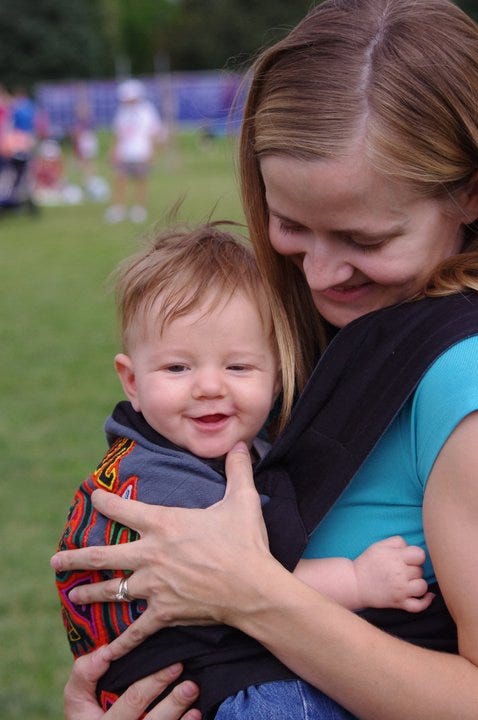
In echo, Maia Szalavitz, author of Born for Love: Why Empathy is Essential–And Endangered, has explained: “Babies whose needs for touch, comfort and soothing are not met regularly by one or two primary caregivers will have difficulty developing empathy—just as babies who aren’t exposed to speech will not be able to learn to speak” (Source). She confirms this concept in another article: “Some cross-cultural research suggests that cultures which lavish more affection on infants and children are less violent and less prone to crime. So, if you want empathetic children–and an empathetic culture–touch and be touched” (Source). Babywearing, in my opinion, is an excellent place to start.
One of my earliest memories is of a stormy night after my parents’ divorce. I can remember lying in a crib next to my sister’s bed in the back bedroom of my grandmother’s house. The rain was pouring down, whipping against the house and windows. The wind was howling like ghosts. Lighting and thunder crashed and raged. As a nearly-two-year-old toddler, I honestly and completely believed that the house was going to be shred to pieces, and we were all going to die. So, as any frightened child would, I cried as loudly as possible for someone to save me. I remember feeling shocked that my family wasn’t frantically gathering us together to protect us from the storm. And I was frustrated that I did not have the words to express what I was feeling. All I could do was scream. Eventually, my grandmother came to my crib-side. I can’t remember what happened next, but the memory ends with me waking up calmly in the morning in my grandmother’s bed. My grandmother’s empathy saved me that night, and her steady unconditional love continued to save me every day until she left this life.
When I find myself feeling despair about the brokenness of this world, I look at my children. I see how kindness and genuine goodness come so effortlessly to them, and I feel hope. I remember how my grandmother’s love changed the course of my life and, by extension, the lives of my children. I look into the eyes of the tiny babies I encounter, and I remember that all around me new parents are healing their own childhood wounds and choosing to parent their little ones with greater empathy and kindness than they themselves were given as children.
Empathy will save this world, if we let it.
And so, I keep breathing.
The world could definitely use more empathy. Great writing, as always ❤️
This is so beautiful!!! Thank you. 💜 Sharing with some people I love